
Confidence Starts With Understanding the Game
For young basketball players, confidence can sometimes seem like something you either have or do not have. A player may perform brilliantly during practice but become hesitant during a competitive game. Another player may have good physical skills but struggle to make decisions when defenders apply pressure. In many cases, confidence grows when players understand what they are doing and why they are doing it.
Basketball is much more than scoring points. Players need to recognize space, read defenders, communicate with teammates, anticipate movement, and make decisions quickly. Developing these abilities can make the game feel less overwhelming and help young athletes trust their preparation.
Breakthrough Basketball places strong emphasis on fundamentals and player development rather than focusing exclusively on winning. Its resources are designed for players, coaches, parents, and trainers, with materials covering skill development, basketball IQ, drills, workouts, tactics, and other aspects of the game.
A useful way to develop confidence is to focus on small improvements. Instead of expecting a player to become an outstanding shooter or ball-handler immediately, set manageable targets. Completing a certain number of successful passes, making better defensive decisions, or improving footwork can provide measurable progress.
Over time, these small successes create evidence that the player is improving. That evidence can become much more powerful than simply telling a young athlete to “be confident.”
Learn to Make Decisions Instead of Memorizing Moves
Basketball players can learn dozens of dribbling moves, shooting techniques, and offensive plays, but knowing a move is different from knowing when to use it. A strong player needs to understand what the defender is giving them and respond accordingly.
For example, a crossover may be useful when a defender overcommits to one side. A hesitation move can work when the defender is retreating or reacting to a change of speed. A pass may be the best decision when two defenders move toward the ball. Teaching players to recognize these situations can make their skills much more useful during real games.
Breakthrough Basketball’s current resources include drills, offensive strategy, defensive strategy, tactics, and philosophies designed to help players and coaches understand different aspects of basketball.
Parents and coaches can encourage decision-making by asking questions after practice. Instead of immediately telling a player what they did wrong, ask what they saw on the court. Why did they pass? Why did they drive? What did the defender do? Was another teammate open?
These questions encourage athletes to think independently.
The goal is to develop players who can adapt rather than simply repeat instructions. When athletes begin recognizing patterns for themselves, their basketball IQ can improve and their confidence can grow naturally.
Build Strong Fundamentals Before Chasing Advanced Skills
Young athletes often want to learn advanced moves because they look impressive. However, complicated techniques cannot replace fundamental skills. Good footwork, balance, passing, shooting mechanics, defensive positioning, and ball control provide the foundation for everything that comes later.
This is why structured skill development is important. A player who consistently practices the basics can eventually perform more advanced movements with greater control. On the other hand, rushing into difficult skills without developing the necessary foundation can create habits that become difficult to correct.
Breakthrough Basketball has built its training approach around fundamentals and skill development. Its current camps include programs focused on shooting, offensive skills, ball handling, scoring, decision-making, and other areas of player development.
For shooting, for example, players should not focus only on increasing their range. They should also develop consistent footwork, balance, release mechanics, and shot preparation. Once those elements become more reliable, increasing distance becomes easier.
The same principle applies to ball handling. A player does not necessarily need dozens of fancy moves. Being able to protect the ball, change direction, change speed, and maintain control under pressure can be much more valuable.
Strong fundamentals give players something reliable to fall back on when a game becomes difficult.
Use Practice to Prepare for Real Game Situations
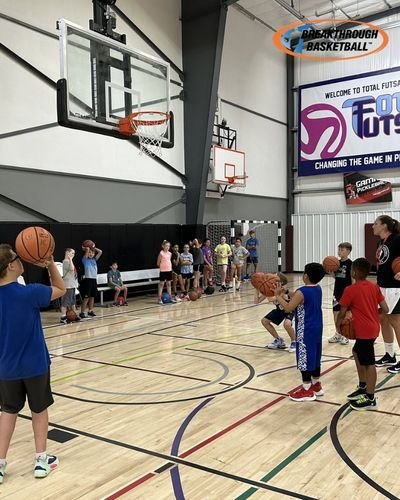
Practice becomes more valuable when it reflects the decisions players will face during actual games. Standing in one place and repeating the same movement can help with basic technique, but players also need opportunities to react to defenders, teammates, time pressure, and changing situations.
A shooting drill, for example, can become more realistic when the player must move before receiving the ball, react to a defender, and decide whether to shoot, pass, or attack the basket. Ball-handling practice can include pressure from a defender instead of relying entirely on predictable patterns.
Breakthrough Basketball’s training programs emphasize structured skill development and practical takeaways that players can continue working on after training sessions. Its current camp information highlights personalized instruction, feedback, skill-focused curriculum, and drills players can take home for continued development.
This approach also makes practice more engaging. Players understand that a drill is not simply an exercise; it is preparation for something they will eventually encounter during competition.
Coaches can make this process even more effective by explaining the purpose behind each drill. When players understand what a particular exercise is teaching them, they are more likely to apply that skill during games.
Quality practice is not necessarily about doing more drills. It is about making each drill meaningful.
Develop a Growth Mindset Alongside Basketball Skills
Young players will experience mistakes. They will miss shots, lose the ball, make poor passes, struggle against stronger opponents, and sometimes have games where nothing seems to work. These experiences are not evidence that they cannot succeed. They are part of learning the sport.
Coaches and parents can influence how athletes respond to these moments. If every mistake is treated as failure, players may become afraid to experiment. If mistakes are treated as opportunities to learn, athletes can become more willing to take calculated risks and continue improving.
Breakthrough Basketball emphasizes positive impact coaching and believes coaches have an important responsibility beyond simply trying to win games. Its philosophy includes helping players develop qualities that extend beyond basketball.
A growth mindset does not mean ignoring weaknesses. Instead, it means identifying them honestly and creating a plan to improve them.
For example, a player who struggles with left-hand finishing can turn that weakness into a specific training goal. Rather than saying, “I’m bad at finishing,” the player can say, “I need to spend more time developing my left-hand finishing.”
That small change in language can affect how an athlete approaches practice.
Confidence becomes healthier when it is based on preparation rather than praise alone. A player who knows they have worked consistently on a weakness has a stronger foundation for confidence when facing competition.
Turn Training Into Long-Term Player Development
Player development should not be viewed as a race. Different athletes develop at different speeds, and physical growth, experience, coaching, motivation, and playing opportunities can all influence progress.
Instead of constantly comparing one player with another, focus on individual improvement. A young athlete may not become the strongest or fastest player immediately, but they can become a better decision-maker, more disciplined defender, more consistent shooter, or more confident teammate.
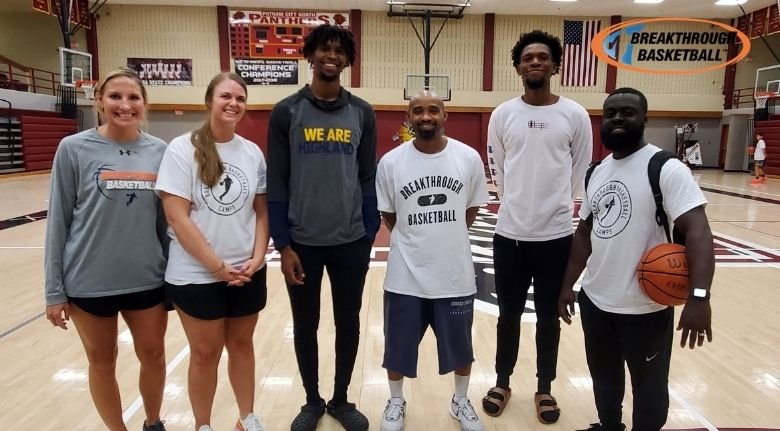
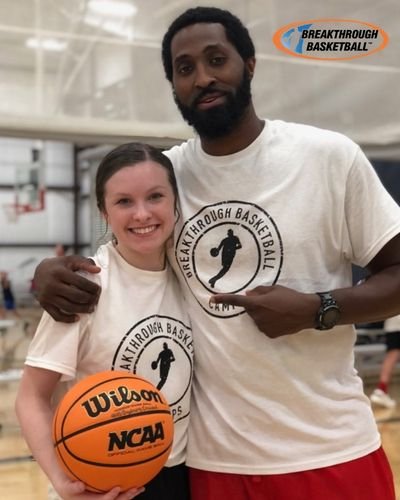
Breakthrough Basketball provides multiple ways for players and coaches to continue developing beyond individual practice sessions. Its current offerings include basketball camps, training academies, instructional videos, eBooks, apps, drills, and other learning resources.
Its training academies are designed around year-round skill development, with programs covering areas such as shooting, ball handling, basketball IQ, and confidence building.
For families considering a basketball camp, it can also be useful to look at the structure of the program rather than choosing solely based on location or price. Consider the age group, training focus, coach-to-player ratio, instructional approach, and whether players will have opportunities to receive meaningful feedback.
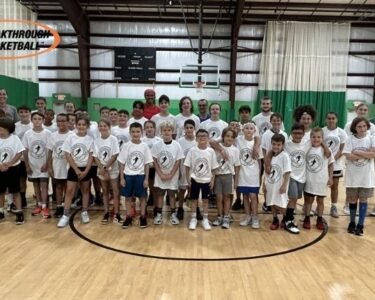
Breakthrough Basketball currently lists more than 400 camps across the United States for different ages, skill levels, and positions. Its camp programs include options ranging from shooting and offensive skills to ball handling, scoring, decision-making, leadership, and overnight experiences.
Ultimately, the best development happens when training becomes a consistent part of an athlete’s routine. One camp or one great practice can provide inspiration, but long-term improvement comes from applying what was learned repeatedly.
For young basketball players, becoming better is about more than collecting moves or scoring more points. It is about learning how to think, respond, communicate, practice, and recover from mistakes.
With strong fundamentals, purposeful practice, thoughtful coaching, and a willingness to keep learning, players can build both basketball ability and confidence. Breakthrough Basketball supports this broader approach by providing resources that address the technical, tactical, and personal sides of player development.
The result is a player who does not simply know how to perform a skill, but understands when to use it, why it matters, and how to keep improving when the game becomes challenging.