

Why Water Should Be a Priority in Emergency Preparedness
When people prepare for emergencies, they often think about food, flashlights, batteries, first-aid supplies, and important documents. Water deserves the same level of attention. A temporary power outage, severe weather event, travel disruption, or unexpected interruption to the local water supply can quickly make access to dependable drinking water more complicated.
Keeping bottled water at home can help, but storing large quantities requires considerable space and regular rotation. A water filtration system can provide another practical option, particularly when you want equipment that can be used repeatedly rather than relying entirely on disposable bottles.
LifeStraw offers products designed for several situations, including home use, travel, outdoor activities, and emergency preparedness. Its current range includes pitchers, dispensers, bottles, straws, gravity systems, replacement filters, and higher-volume purification solutions.
The important thing is not to buy emergency equipment simply because it looks useful. Instead, think about the situations your household is most likely to face. A family living in an area affected by storms may have different requirements from someone who frequently travels, hikes, or camps.
By identifying those needs first, it becomes much easier to build a practical water kit that is easy to store, understand, and use when necessary.
Choose a Filtration Solution Based on Your Situation
There is no single water-filtering product that is ideal for every situation. Your choice should depend on where you expect to use it, how many people need water, and whether you need something portable or designed to remain at home.
For everyday household use, a pitcher or dispenser can be convenient. These products can become part of a normal kitchen routine while also providing an additional option when you want filtered drinking water. LifeStraw currently offers Home pitchers in different capacities as well as larger dispensers designed for households that need more filtered water.
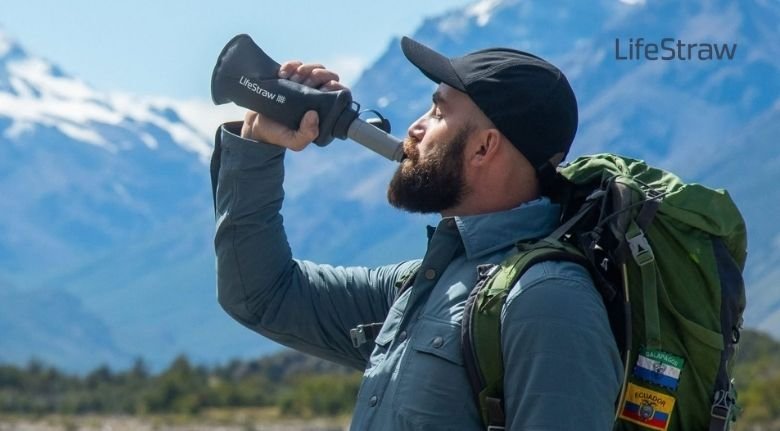
For travel, hiking, or situations where portability matters more than capacity, a filtered bottle or straw can be easier to carry. The LifeStraw range includes portable options designed for people who want filtration without carrying a large piece of equipment.
Outdoor users may prefer gravity-based systems because they can be useful when several people need access to filtered water. For emergency or higher-volume requirements, LifeStraw also offers larger purification solutions intended for situations where more water needs to be processed.
The best choice is therefore not necessarily the most advanced product. It is the one that matches your realistic requirements and that you can confidently operate when you actually need it.

Understand What Your Filter Is Designed to Remove
Water filters are not all designed to address exactly the same contaminants. Understanding the capabilities of a particular product is one of the most important parts of emergency preparation.
LifeStraw states that its filtration technologies can remove contaminants such as bacteria, parasites, and microplastics, while certain products are designed to address additional concerns including chemicals, heavy metals, PFAS, chlorine, and viruses. Performance varies according to the specific product, so users should always check the product information before relying on it for a particular water source.
This distinction matters because not every water source presents the same risks. Water from a treated municipal supply is different from water collected from a stream, lake, or other untreated source. Emergency conditions can also change the quality of water available in your area.
LifeStraw says its products are tested using protocols aligned with organizations and standards including WHO, US EPA, NSF, and WQA, with performance verification involving its ISO-certified in-house laboratory and external accredited laboratories.
Before purchasing a filtration product, read its specific performance claims carefully. Do not assume that one filter handles every possible contaminant. Understanding those limitations helps you choose equipment responsibly and use it in the situations for which it was designed.
Create a Portable Water Kit for Travel and Outdoor Adventures
Emergency preparedness is not limited to staying at home. A useful water kit can also make sense when travelling, hiking, camping, or spending time away from reliable facilities.
A compact bottle or straw can take up considerably less space than large containers of bottled water. This makes portable filtration particularly useful for people who regularly explore outdoor areas or travel to places where access to filtered drinking water may be uncertain.
LifeStraw currently offers portable bottles and straws alongside outdoor gravity systems. Its product categories are designed around different scenarios, allowing users to choose equipment according to portability, capacity, and intended use.
When creating a travel water kit, consider adding a reusable bottle, your filtration device, a small cleaning or maintenance kit where appropriate, and a backup method for carrying water. Keep everything together so that you can find it quickly instead of searching through several bags.
It is also worth learning how your filter works before travelling. Practice assembling, cleaning, storing, and replacing components according to the manufacturer’s instructions. Familiarity can make a significant difference when you are tired, outdoors, or dealing with an unexpected situation.
A compact emergency kit does not need to be complicated. It simply needs to contain equipment you understand and are prepared to use.
Do Not Forget Replacement Filters and Maintenance
Buying a filtration device is only the beginning. Like many reusable products, water filters need appropriate care and replacement components to continue performing as intended.
LifeStraw provides replacement filters for several of its product lines and also offers filter subscription options for some home products. This makes it easier to include filter replacement in a regular household routine rather than waiting until the existing filter reaches the end of its useful life.
Create a simple maintenance schedule based on the instructions for your particular product. Check the filter condition, clean components when required, and make sure replacement parts are stored somewhere dry and easy to find.
If you are preparing an emergency kit, check it periodically rather than putting it away and forgetting about it. A kit that contains an expired or improperly stored filter may not be as useful as you expect when an emergency occurs.
It is also sensible to keep product instructions accessible. LifeStraw provides product guides, testing information, FAQs, troubleshooting resources, and cleaning and care information through its support center.
Small maintenance habits can make emergency preparation much more reliable. Instead of treating filtration equipment as something you buy once and forget about, treat it as part of an ongoing preparedness routine.
Build a Water Strategy That Works for Your Household
A good emergency water plan should be simple enough for everyone in the household to understand. Consider how many people you need to support, where your emergency supplies are stored, and which filtration products would be easiest for different family members to use.
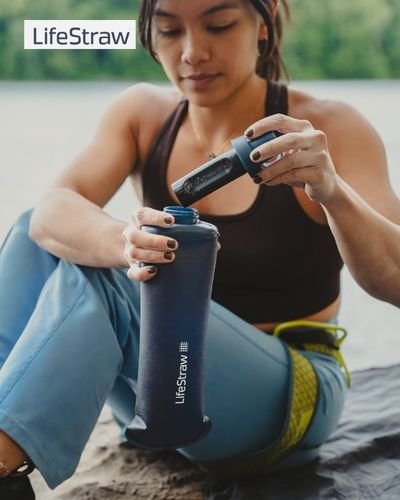
You may decide to keep a home filtration system for everyday use and a smaller portable option in an emergency bag. Someone who frequently goes hiking might also keep a dedicated filtration bottle with their outdoor equipment. This layered approach can be more practical than expecting one product to handle every situation.
LifeStraw’s current product range supports this type of flexible approach, with solutions spanning everyday home filtration, portable travel products, outdoor systems, and emergency-focused options.
It is also worth considering the environmental side of your water routine. Reusable filtration products can reduce dependence on disposable bottled water in situations where filtered tap or other appropriate water sources are available. LifeStraw also connects its purchases with its Give Back program, stating that each product sold provides a child in need with access to safe water for a year.
Ultimately, emergency preparation is about reducing uncertainty. You cannot predict every situation, but you can make sure that essential supplies are easier to access and that you know how to use them.
LifeStraw makes water filtration part of a broader preparedness strategy by offering solutions for everyday drinking, travel, outdoor activities, and emergency situations. With the right product, regular maintenance, and a clear plan, your water kit can become a practical resource rather than another item sitting unused in a cupboard.
The goal is not to prepare for every possible disaster. It is to make sure that if access to reliable drinking water becomes temporarily difficult, you have a sensible solution ready to go.