
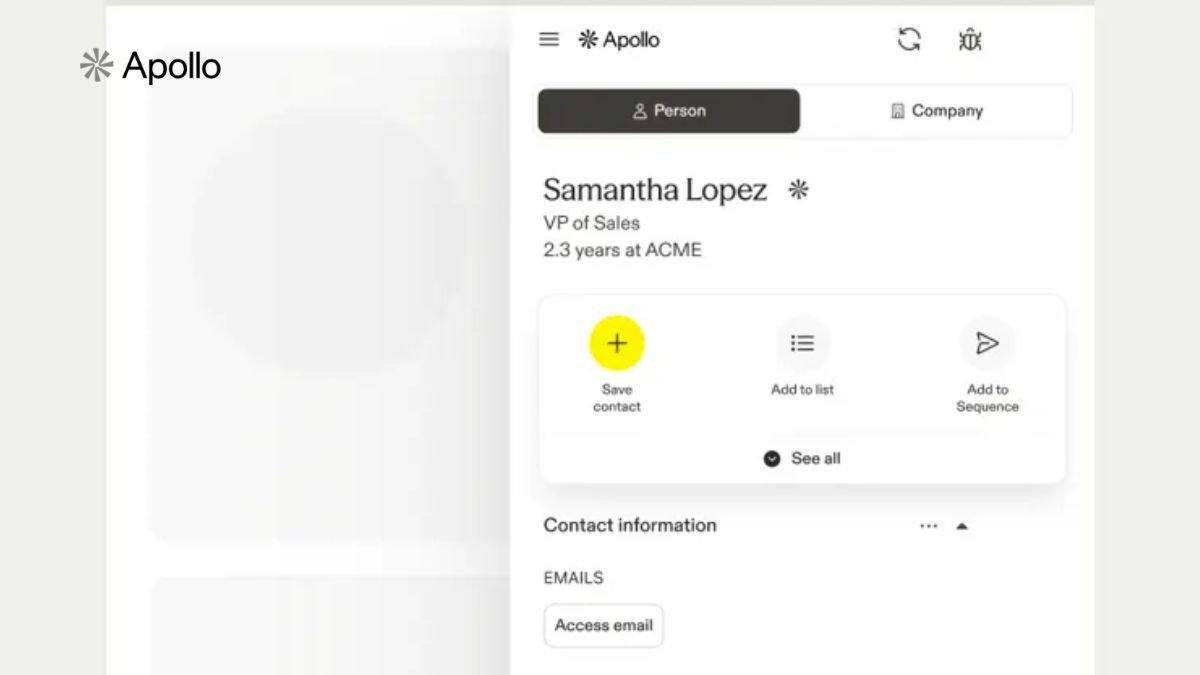
Finding potential customers is only one part of building a successful sales process. The bigger challenge is knowing which companies to target, identifying the right people, reaching them with relevant messages, and following up consistently. When these activities are handled across too many disconnected tools, sales teams can spend more time managing information than actually having conversations with prospects.
Apollo brings prospecting, sales engagement, data enrichment, workflows, meetings, and analytics into a connected platform. Its database provides access to business contacts and companies, while its sales engagement features support emails, calls, LinkedIn tasks, sequences, and follow-ups. This makes it possible for sales teams to create a more structured approach to finding and engaging potential customers.
Start by Defining Your Ideal Customer
Before searching for new prospects, it helps to understand exactly what kind of customer your business wants to reach. A broad search may produce thousands of names, but a large list does not automatically make prospecting easier. The more clearly you define your ideal customer profile, the easier it becomes to focus your time on relevant opportunities.
Think about factors such as company size, industry, location, job role, technology used, and business needs. You can also identify the decision-makers who are most likely to be involved in purchasing your product or service. Creating these criteria gives your sales team a consistent foundation for prospecting.
Apollo supports detailed prospect searches through numerous filters, allowing users to narrow down people and companies according to specific characteristics. This can help turn a general database search into a more focused prospecting process. Instead of collecting contacts simply because they are available, teams can build lists around the characteristics that matter to their business.
A clear ideal customer profile also helps marketing and sales teams stay aligned. When everyone understands who the business is trying to reach, campaign messages can become more relevant and sales representatives can spend less time sorting through unsuitable contacts.
Build Prospect Lists With a Clear Purpose
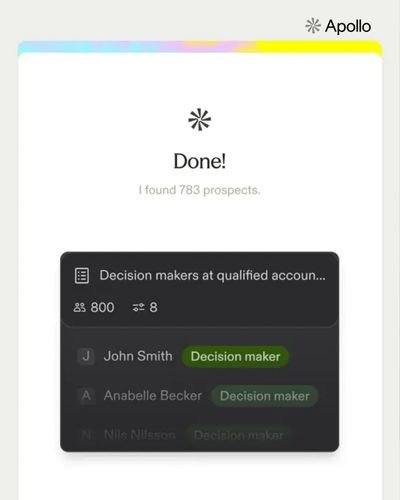
Once your ideal customer profile is defined, the next step is creating useful prospect lists. A sales list should have a purpose rather than simply becoming a large collection of contacts. You might create separate groups for new prospects, high-priority accounts, specific industries, particular job roles, or companies showing relevant buying signals.
Apollo provides search and filtering options that can help sales teams identify prospects based on multiple data points. The platform also supports saved searches and alerts, making it easier to continue prospecting without starting from the beginning every time.
Organized lists can make daily sales activities easier to manage. For example, a representative could maintain one list for new leads, another for prospects who need follow-up, and another for companies that match a specific account-based strategy. This type of structure helps prevent valuable contacts from getting lost inside a large database.
It is also useful to review lists regularly. Business information can change, people can move between companies, and priorities can shift. Keeping prospect information organized helps sales teams work with a cleaner and more relevant pipeline.
Personalize Outreach Instead of Sending Generic Messages
Having the right contact is only the beginning. The next challenge is creating a message that gives the prospect a reason to respond. Generic sales emails can be easy to ignore, especially when they do not clearly connect with the recipient’s role or business situation.
Apollo provides sales engagement tools for creating sequences that can include emails, calls, LinkedIn tasks, and other activities. This allows teams to build structured outreach campaigns instead of relying on individual reminders or scattered spreadsheets.
Personalization should go beyond simply adding a first name. A useful message can mention a relevant business development, role, company priority, or problem that the prospect may recognize. The purpose is not to make every email extremely long but to demonstrate that the outreach has a clear reason behind it.
Apollo also offers AI-supported personalization features designed to help users create messages based on prospect information and buyer signals. Used thoughtfully, these tools can reduce the time required to prepare outreach while still allowing sales representatives to review and adapt the final message.
The most effective workflow is usually a balance between automation and human judgment. Automation can handle repetitive steps, while salespeople can focus their attention on conversations that require context and understanding.
Create a Consistent Follow-Up Process
One of the easiest ways for potential opportunities to disappear is inconsistent follow-up. A prospect may not respond to the first email, but that does not necessarily mean they are permanently uninterested. They may be busy, reviewing priorities, or simply have missed the message.
A structured follow-up sequence can help sales teams stay consistent without requiring representatives to remember every individual action manually. Apollo’s sequence tools allow teams to create multi-step outreach involving different channels and tasks.
The important part is to make each follow-up useful. Repeating the same message several times may create unnecessary noise. Instead, each touchpoint can offer a different reason to continue the conversation, such as a useful resource, a short clarification, a relevant insight, or a simple question.
Teams can also monitor engagement and adjust their sequences based on what they learn. If a particular message consistently receives responses, it may deserve further testing. If another approach produces little engagement, the team can revise the wording, timing, or audience.
A consistent process creates accountability while still leaving room for personalization. It also makes it easier for sales managers to understand how outreach is being handled across the team.
Use Data to Prioritize Sales Opportunities
Not every prospect deserves the same amount of attention at the same moment. Sales teams need a way to distinguish between contacts that closely match their target profile and those that are less relevant.
Apollo offers prospect and account scoring capabilities that can help teams prioritize contacts using demographic and behavioral criteria. Signals such as company characteristics, activity, or buying intent can contribute to a more structured approach to prioritization.
The goal is not to replace human decision-making with a number. Instead, scoring can provide another layer of information when sales representatives have a large number of potential accounts to review. A clear prioritization system can help teams decide where to spend their limited time.
Data can also support account-based selling. Instead of looking only at individual contacts, sales teams can examine companies, organizational structures, relevant decision-makers, and potential signals that indicate a business may be worth pursuing.
When prospect data, engagement activity, and prioritization are connected, the sales process becomes easier to manage. Representatives can spend more time researching meaningful opportunities and less time sorting through unrelated contacts.
Connect Prospecting With the Rest of Your Sales Workflow
A strong prospecting process should not end when an email is sent. The information collected during prospecting should support the next stages of the sales journey as well.
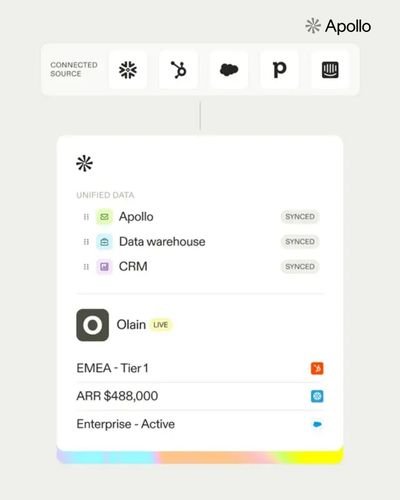
Apollo provides workflows, analytics, meeting tools, data enrichment, and integrations that can connect different parts of the sales process. This can help teams reduce repetitive administrative work and create a more consistent path from prospect discovery to sales conversations.
For example, a team can use prospecting data to identify suitable contacts, place them into an outreach sequence, monitor engagement, schedule meetings, and review performance information. Data enrichment can also help keep customer records more complete and current.
Analytics provide another important part of the process. Instead of guessing which campaigns are working, sales teams can examine activity and engagement data to identify patterns. They can then use those insights to improve messaging, targeting, timing, and follow-up strategies.
A connected workflow can be particularly useful as a business grows. What works for a small team using a spreadsheet may become difficult to manage when the number of prospects, representatives, campaigns, and customer conversations increases. A structured platform can help create repeatable processes without making every task manual.
Building a successful B2B sales process is not simply about contacting more people. It is about finding relevant prospects, understanding their needs, communicating with purpose, following up consistently, and learning from every interaction. With the right structure, sales teams can make prospecting a more organized part of their overall growth strategy.
Apollo brings many of these activities together, from searching for prospects and enriching data to running sequences, managing meetings, automating workflows, and analyzing sales activity. For teams looking to create a more connected approach to B2B sales, building a workflow around these capabilities can make everyday prospecting easier to organize and improve over time.